
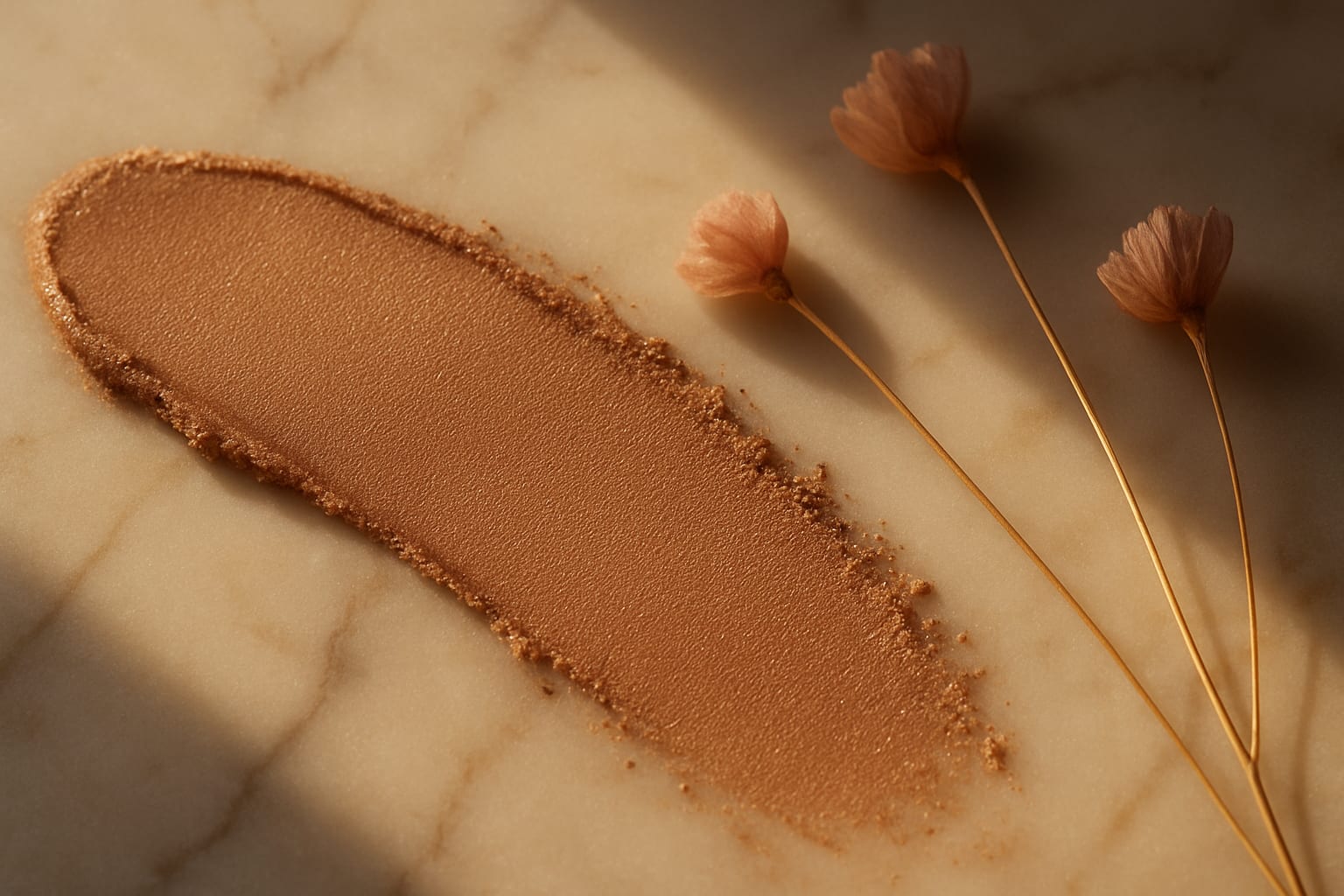
Why your eyeshadow creases on oily lids (and the exact steps that actually fix it)
If your eyeshadow looks great for about 45 minutes and then folds itself into the crease of your lid like a sad little accordion, oily lids are almost certainly the reason. And the fix is simpler than you'd think, but most people are skipping the one step that actually matters.
I've done eye makeup on every lid type imaginable. Brides in July humidity. Women with lids so oily the shadow slides before I even finish the other eye. I've had to solve this problem under real pressure, with no room for a do-over. Here's what actually works.
Why oily lids kill eyeshadow
Your eyelids have sebaceous glands, and some people's are extremely active. The oil they produce breaks down eyeshadow pigment and causes it to migrate into the crease, clump up, or disappear entirely. Powder shadow without any barrier underneath doesn't stand a chance.
There's also a secondary issue that makes this worse: rubbing your eyes without realizing it, or even just blinking throughout the day, physically moves product around. Add excess oil and you've got a recipe for creased, patchy shadow by 10 AM.
The solution has three parts: prep the lid, use a primer that actually creates a barrier, and choose shadow formulas that bond better on oily skin. Skip any of the three and you're back to the accordion look.
Step 1: Prep the lid before anything touches it
This is the step people skip. You would not apply foundation to a greasy face without cleansing first, same principle here.
Before you do anything to your eye area, press a tissue or a clean piece of blotting paper gently onto your lids. You'll probably be surprised how much oil transfers. This gives your primer something to actually grip.
If you have time, a very light application of a gentle toner on a cotton pad can also help. Nothing harsh, just enough to remove surface oil and residue. Let it dry completely before moving on.
Step 2: Use an eyeshadow primer (a real one, not concealer)
Concealer on the lid is not an eyeshadow primer. I know, I know, people do it, and it looks fine for about an hour. But concealer has emollients in it that actually contribute to creasing. You need a dedicated eyeshadow primer with grip-creating ingredients.
For oily lids specifically, you want a primer with a slightly tacky, matte finish. Something that dries down and creates a surface that shadow pigment can bond to.
Two options I reach for:
The NYX Eyeshadow Base in skin tone is a great starting point if you want to keep it affordable. It's not the flashiest product but it creates a genuinely grippy surface and dries down matte. For oily lids, that dry-down is everything. The NYX Eyeshadow Base runs under $10 and genuinely extends wear time.
If you want to step up, the Too Faced Shadow Insurance has been my go-to for bridal work for years. It creates a tackier, more durable base than most drugstore options, and it handles the combination of oily lids plus high emotion (crying brides are a real job hazard) better than almost anything else I've tried. Check current price at Sephora or Ulta, it's mid-range but lasts a long time because you use very little.
Apply primer with your finger, not a brush. Your fingertip gives you better control over the thin skin of the lid and helps you press the product in rather than just dragging it across the surface. Use the absolute minimum amount, a rice-grain-sized dot per eye. More primer does not mean more longevity. It actually makes creasing worse because there's too much product to set properly.
Let it set for 60 seconds before touching it. Seriously, set a timer if you have to. Applying shadow over wet primer defeats the entire point.
Step 3: Lock the primer with a translucent powder
This is the step that separates a look that lasts 4 hours from one that lasts 8.
After your primer has set, take a small fluffy brush and dust the tiniest amount of translucent powder over the lid. This absorbs any residual moisture, further mattifies the surface, and gives shadow something to cling to. The layer is so light you won't even see it.
I like the Rimmel Stay Matte for this, it's finely milled, dries completely matte, and costs around $5. You're not actually using it as a face powder here, just as a very thin setting layer on the lid. A little goes an extremely long way.
Another option: the e.l.f. HD Powder is similarly finely milled and works well as a lid prep layer. Around $10.
Step 4: Choose shadow formulas that don't slide
Even with perfect prep, the wrong shadow formula will still fight you on oily lids. Here's what to look for.
Powder shadows
Pressed powder shadows with a high pigment load and a slightly dry formula hold better on oily lids than creamy or shimmer-heavy formulas. Very foiled or very glittery shadows tend to slide most because the reflective particles don't bond to the lid the same way matte pigments do.
The Juvia's Place Zulu palette is one I keep coming back to for clients with oily lids. The mattes in this palette are densely pigmented and dry-textured, meaning they grip primed lids without moving. The pigmentation is also genuinely impressive for the price (check current price, it's usually well under $20). If you haven't tried Juvia's Place, this is the palette to start with.
For a mid-range option, the ColourPop Yes Please palette has a range of mattes and light-reflects that perform surprisingly well on oily lids when you've done the prep work. The formula is drier than many comparable palettes, which works in your favor here.
Cream shadows
Cream eyeshadow on oily lids is a gamble without the right formula. Most creams slide. But a few are formulated specifically to set down and stay.
The Maybelline Color Tattoo pots are a legitimate exception. They dry down to a semi-matte finish and have a stronger grip than you'd expect from a cream product. They can also be used as a base under powder shadow, which gives you a really solid one-two punch for oily lids. Around $7 each.
What to avoid if your lids are oily
Loose glitter shadows directly on the lid, they migrate everywhere within an hour on oily skin, even with primer. Save them for the inner corner only.
Eyeshadow sticks that aren't specifically formulated to set matte. Many of them stay slightly tacky and crease as the day goes on.
Heavy shimmer shades in the crease. The crease is already the most mobile, most oil-prone area of the lid. Matte in the crease, shimmer on the lid (where it's more stable) is the professional approach.
And as I mentioned above: concealer as lid primer. I know it's tempting when you're running late. My kids have made me do it. It buys you maybe two hours before things start moving.
The setting spray question
Some people swear by setting spray on eyeshadow. I have mixed feelings for oily lids specifically.
A setting spray can help lock shadow in place, but if you're already dealing with excess oil production, adding a water-based spray on top of everything can sometimes reactivate product and cause slippage before it fully dries. If you want to use one, apply it to a brush and press it into the shadow rather than misting your whole face over your eye area. The Morphe Continuous Setting Mist works well this way, it's finer than some of the heavier sprays and less likely to disturb the layers underneath. Check current price; it's usually around $10.
The quick version (for when you have 10 minutes)
Blot lids. One tiny dot of primer per eye, pressed in with your fingertip. Sixty seconds to set. Dust the lightest possible layer of translucent powder over it. Apply shadow. Done.
That sequence takes maybe 90 extra seconds and adds hours to your wear time. It's worth it every single time.
If you want to go deeper on eyeshadow primer options specifically, I've broken down the best drugstore picks for oily lids in detail over at Your eyeshadow is gone by 10 AM and oily lids are why. Here's the drugstore primer that actually fixes it., worth reading if you want to compare formulas side by side before buying.
And if you're also fighting oily skin across your whole face, not just your lids, the drugstore primers that actually keep oily skin matte covers the face primer side of the equation, because your eye makeup is only as stable as the rest of your base.
Final verdict
Creasing on oily lids is almost always a prep problem. The primer matters, but it only works if the lid is blotted clean first and the primer is allowed to set before shadow goes on top. Add a translucent powder layer and choose a shadow formula with a drier texture, and you're giving yourself a genuinely fighting chance at shadow that lasts all day.
The whole routine adds about 2 minutes. The payoff is eye makeup that still looks intentional at 5 PM. That's an easy trade.